
Stop Selling and Start Creating the Conditions for Buy-In
The Anti-Pitch Playbook
I got an email the other day (actually it was the 4th one from the same person.)
It said, “Hey, just following up, did you get a chance to review our free video?”
You know that one. The friendly nudge that doesn’t feel that friendly.
And here’s what actually happened. I had looked at it. They were trying to sell me on a video editing package for my podcast episodes.
It was ok. Useful even.
But something about it made me hesitate.
Too pushy. Too… salesy. I felt like I was one of the thousands of people they reach out to weekly.
I didn’t reply.
Not because I wasn’t interested, but because I didn’t want to be sold.
Sound familiar?
That’s the paradox of persuasion.
The more you push, the more people pull away.
And when you try to convince someone to say yes, you accidentally make it harder for them to.
“People don’t make as many well-thought-out decisions as we think. Most of the time, we’re cruising along on autopilot.”
Nancy Harhut
And when people are on autopilot, they don’t respond to pressure.
They respond to ease.
So if you want to sell — without selling — here’s your Anti-pitch playbook in today’s issue.
(I sat down with Nancy a few weeks ago on the Influence Anyone podcast. She is a behavioral scientist, international keynote speaker, and award-winning creative marketer known for bringing brain science into business. She’s the author of Using Behavioral Science in Marketing, co-founder and Chief Creative Officer at HBT Marketing, and a regular contributor to industry events like SXSW and Content Marketing World.)
Heartset: People don’t resist because they don’t want what you offer. They resist because they want to stay in control.
You’ve all experienced this.
A cold call with a sales professional. Asking you questions like “do you want to earn more money in the next year?” “so what’s in the way of your success?” “when can I schedule the next call?”
It doesn’t motivate.
It tightens your chest.
Nancy told me something that hit hard:
“We don’t like to feel we’re being pushed into something or backed into a corner. We like to feel like we’re the ones calling the shots.”
Nancy Harhut
And that’s true in business.
In leadership.
In life.
When someone says, “You have to read this,” you feel resistance.
But when they say, “You might like this,” you lean in.
Humans crave autonomy.
It’s hardwired.
The Anti-Pitch Playbook works because it does something most salespeople never do:
It restores control.
You don’t take the wheel, you hand it back.
Mindset: Stop trying to add persuasion. Start removing pressure.
Most people think great selling is about being more convincing.
More features. More benefits. More proof.
But the data — and the brain — tell a different story.
When Nancy’s client at Nationwide Financial needed to re-engage financial advisors who’d stopped selling their products, they didn’t write a better sales pitch.
They sent a gift.
A simple framed New Yorker cartoon, customized with each advisor’s name in the caption, and a short note: “Hey, we’ve missed you. We’d love to share some new ideas that might help you build your practice.”
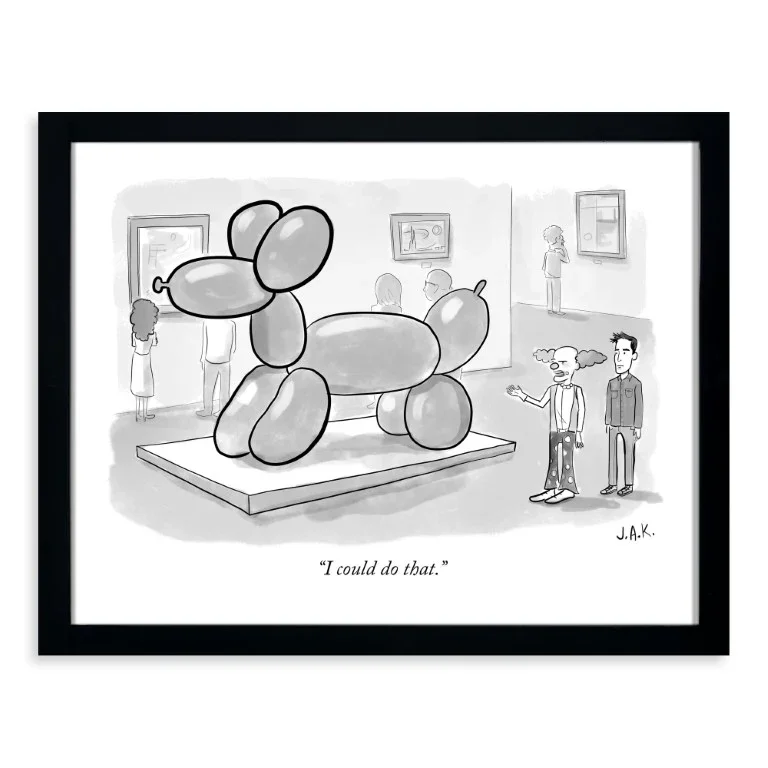
A typical New Yorker cartoon
No ask. No pitch. No “can we hop on a call?”
Just a genuine gesture of connection. The result?
“That one campaign generated $68 million in incremental revenue. A framed cartoon!”
Nancy Harhut
Why? Because it tapped into something deeply human: reciprocity.
When someone does something for you, even something small, you feel compelled to do something in return.
“We like to think logic drives behavior, but most of the time, it’s ease and emotion.”
Nancy Harhut
So, stop chasing the perfect pitch. Start removing the parts that make people hesitate.
Skillset: The Anti-Pitch Playbook
How to get buy-in without selling.
1/ Remove resistance before adding value
Before you tell someone why your offer is great, ask yourself:
What’s making it hard to say yes?
Is it too much information? Too many steps? Too confusing?
“We think if we just get the right information to the right person at the right time, we’ll get the right result. But it’s not entirely true. We have to do it in a brain-friendly way.”
Nancy Harhut
2/ Restore autonomy
Here’s the secret sauce of the anti-pitch: let people choose.
You can double your success rate just by reminding people they’re free to decide.
Seriously.
Behavioral scientists call this the BYAF Technique — “but you are free.”
Nancy explained it perfectly:
“Tell someone what you want them to do, then say, ‘But it’s up to you.’ It reminds them they’re making the decision, and that doubles the likelihood they’ll do it.”
Nancy Harhut
Instead of:
“Let’s book a call so I can show you how this works.”
Try:
“If you’d like, I can walk you through both options or just send you a quick summary. Your call.”
Feels different, doesn’t it?
Same goal. Different feeling.
Because people don’t want to be sold. They want to be seen, be heard, be in control.
They want to feel like the decision was theirs all along.
3/ Make the right choice feel easy
Even the smartest people crave simplicity.
“People prefer things that are easier to understand. They judge them to be more truthful, more accurate and they feel more confident deciding.”
Nancy Harhut
That’s called cognitive fluency. It’s our brain’s love of clarity.
When something feels easy to read, it feels right.
So if you want people to say yes, make it effortless to understand what you’re offering.
Use shorter words.
Simpler sentences.
One clear call to action.
And here’s the part most people miss:
Don’t hide your flaws. Admit them and then reframe them.
“If you admit to a small flaw, people like you more and it makes you seem more human, more trustworthy.”
Nancy Harhut
It’s called the Pratfall Effect.
“We’re not the biggest agency, but we’re fast.”
“We don’t have offices everywhere, but we reply within 24 hours.”
That little “but” is a magic eraser.
“Anything that comes before it fades. People focus on what comes after.”
Nancy Harbut
Clarity + honesty = trust.
Trust = action.
And that’s what great selling really is: the moment when trust outweighs risk.
💡 Rule of thumb: If it feels like pressure, it probably won’t work.
If you like this issue about getting buy-in without selling, you’ll love:
10 Behavioral Science Lessons in Marketing (How to Get More Customers to Say Yes.)
Stop motivating people. Start making it easy. (The Frictionless Playbook.)
Why Emotion is The Key to Influence and Decision Making (The 3-Step Emotional Trigger Framework.)
Change behavior, change lives 🤘🏽
Howie Chan
Creator of Influence Anyone
Follow me on LinkedIn
Don’t miss:
The Influence Anyone Podcast
What if the reason people don’t buy from you has nothing to do with your offer and everything to do with how you ask?
In this episode, I sit down with behavioral science pioneer Nancy Harhut to uncover the surprising psychology of persuasion and why the most effective marketers don’t pitch harder, they make it easier for people to say yes.
We dig into stories and science that didn’t make it into the newsletter:
How to ethically use scarcity, curiosity, and authority without sounding manipulative
Why adding a single word can double response rates and what that word is
The psychological “hot buttons” that trigger automatic decisions (and how to spot them)
Why people trust messages written simply and doubt those that sound too smart
If you’ve ever wanted to influence without pressure, sell without selling, this conversation will change the way you think about persuasion forever.
🎧 Listen to the full episode on Apple, Spotify, the Web, or wherever you get your podcasts.