
Be Right or Make a Difference
How do you get someone who disagrees with you to change their mind, without arguing?
In 1968, a ten-year-old boy marched in a Cub Scout parade in Massachusetts. He was the only Black kid in his troop.
Halfway down the route, people in the crowd started throwing bottles and rocks… At him.
He didn't understand why. These people had never met him. Luckily he didn’t get hurt, but the parade left him with a question he would carry for the rest of his life:
"How can you hate me if you don't even know me?"
Years later, that boy grew up to be a jazz and blues musician. And he started doing something most people would call crazy. He set up meetings with members of the Ku Klux Klan. Sometimes in a hotel room. Just him and them.
And all he brought was one thing: that same question. Then he listened. And came back. And listened some more.
Conversations turned into dinners. One of the top Klan leaders in the country eventually invited him to his home. Then that man left the Klan and handed over his robe.
The musician is Daryl Davis. By his count, around 200 people have left the Klan after getting to know him. He still keeps their robes.
I heard Daryl's story from Josh Bandoch, author of How to Get What You Want. Josh is a former academic (PhD, postdoc, journal editor), a former speechwriter, and today a public policy advocate in Illinois.
In our conversation, I latched on to this one idea. Josh says that the most important question you should ask yourself is ,"Do I want to be right, or do I want to make a difference? Being right is really easy."
And I immediately thought about all the times where I just wanted to show I was right and the outcome wasn’t typically what I hoped for.
Daryl, however, chose to make a difference. "If he went into that hotel room and said, you're a this, and this, and this," Josh told me, "that would be a real short conversation."
Which brings us to this week's influence anyone playbook:
How do you influence someone who disagrees with you to change their mind, without arguing?
Let’s get into it.
⚡️ 60 SEC INFLUENCE
Stop asking "What do you think?" Ask "How do you feel?"
When someone disagrees with us, we tend to get defensive, almost appalled “what?” “how can they NOT understand?”. Then we reach for logic. Present a better argument, find more data to back us up, probably use our phones right then and there to show them the reference for your conclusion.
Josh has a name for this. The logic tsunami. "The best way to wash away somebody's illogical misconceptions is to launch a tsunami of your logic at them," he joked. "Has that ever persuaded you of anything in your life?"
Ha. So true. The person will probably say the reference is bogus or the evidence is weak.
Here's why it fails. Our brains are wired to feel first, then reason. Neuroscientist Antonio Damasio found that people with damage to the emotional parts of the brain struggled to make even simple decisions. Their logic centers were intact, but they couldn't choose.
So, in Josh's words, "the logic first approach to persuasion is, wait for it, it's illogical."
That's why one small word swap changes everything. Ask someone what they think, and they go into guard mode. They sit back and edit everything they are about to say. "Let me talk to my partner." Ask how they feel, and something different happens. "They're not guarded," Josh said. "He's just asking how I feel. That's like no big deal."
The answer you get back will lean positive or negative. And from that, you’ll get the real reason why they're stuck. As a professional of influence, that reason is what you're looking for.
Try this: In your next disagreement, ask them about their feelings.
"How do you feel about this?"
"What makes you feel that way?"
"How do you feel about moving forward?"
Then stop talking. Listen for the barrier. "If you don't know what the barrier is, you can't address it," Josh said. "So just ask about it."
Feels awkward? Practice where the stakes are low. Josh tests it on his wife: "What would stop us from getting pizza this weekend?" Because "you don't train for high stakes situations in the high stakes situation."
Or in the words Josh would put on a sticky note on your laptop: "Be right or make a difference?"
As promised, influence in 60 seconds.
The Influence Anyone podcast:

The full conversation with Josh Bandoch covers:
The four questions he asks in every negotiation to find out what's really blocking a deal
Why he thinks most advice about persuasion starts with the wrong word
How he'd pitch the same policy to a progressive and a conservative without changing what he believes.
🔎 INFLUENCE DEEP DIVE
Think about the last argument you won.
Maybe it was in a meeting. Maybe in a Slack thread. Maybe at Thanksgiving dinner. You made your point, you delivered the facts and then they went quiet.
Now ask yourself: did they actually change what they did?
Josh would bet no. "Has anybody ever persuaded you that way? Ever?" he asked me. When we try to win, the other person loses. And losers don't help you. This is the exact lesson from negotiator Fotini Iconomopoulos, she hated the phrase “winning a negotiation” precisely because of this.
"Even if they sign a deal, they're unhappy about it, they don't want to implement it, they're difficult during implementation, then they tell people you were hard to work with."
Josh defines persuasion as shared action. Shared, because people do it with you by choice. Action, because the point is getting something done.
So why do we keep fighting to win? Because we're wired for it.
Why we fight back. "We are wired to think and talk about ourselves," Josh said. "Talking about ourselves, it doesn't feel good. It feels amazing."
That isn't an exaggeration. In 2012, Harvard researchers Diana Tamir and Jason Mitchell scanned people's brains while they talked about themselves. The same reward regions lit up that respond to food and money. In another part of the study, people gave up real cash for the chance to talk about themselves instead of someone else.
This is the me-first mindset. It helped our ancestors survive. Today, it makes us lousy persuaders. We lead with our view, our logic, our ask. And as Josh reminded me, "only one person sees things just the way that you do. That's you."
The fix is simple to say and hard to do. "It's about them, not you."
Here's how a professional of influence puts that into practice.
1. Start with their story. Josh opens almost every new conversation, business or not, with one question: "What's your story?" When they ask how far back to go, he says, "As far back as you want. I got time."
Most people talk for three to seven minutes. Two things happen. They feel connected to you, because almost nobody asks. And you start hearing what they care about, which is where your overlap lives.
Josh learned the cost of skipping this from an intern named John. Smart kid. Good school. He spent his first weeks trying to show how good he was, talking about himself and injecting himself in any conversation. Then Josh coached him to flip it and ask the team, "How can I help? What do you need?" John became the best intern that summer. He was the only one they kept, and he got a promotion.
Application:
Before you try to sell, pitch or influence, ask "What's your story?" and give them the floor.
Follow with "What are your priorities?" and look for where theirs and yours overlap.
Play it back: "Let me make sure I'm understanding you." People who feel heard "will agree to way more than they ever would have otherwise," Josh said.
2. Lead with feelings, then follow the reasons. This is the 60-second move, and here's the full sequence. Ask how they feel. Ask what makes them feel that way. Then you can get logical.
Josh doesn't throw out logic. "I don't want to say that logic is irrelevant," he said. It's about the order. If someone says, "I just don't know if the numbers work," great. Now you have a logical question to solve together. If they say, "My partner's been going through some personal things, and it's not a good time," that's a totally different conversation. Same lean negative. Different barrier.
Feelings give you a fast window into which one you're dealing with.
Application:
Replace "What do you think about this?" with "How do you feel about this?"
When you get a lean negative, follow with "What makes you feel that way?"
Save your data for the barrier and challenge they actually bring up.
3. Ask what would stop them. This is the question most people never ask. It feels like inviting a no. Josh sees it the other way. "This isn't 'will you do this?' Then people get defensive," he said. "Just ask them what would stop them."
The answers will surprise you. You might assume the deal is about money. Then they tell you, "I have a contract with another vendor. It's up in December. Can you circle back in October?" Or they're waiting on financing that closes in two weeks. Or they've been with the same vendor for 20 years and will never switch. Every one of those needs a different response. Or no response at all.
Application:
Ask "What would stop you from moving forward?" before you ask for a yes.
Treat the answer as your to-do list.
If the barrier is permanent, thank them and move on.
4. Speak to their values, without faking yours. "Would you serve a vegetarian veal?" Josh asked me. Of course not. Yet we do this with values all the time.
Moral psychologists (Jonathan Haidt and colleagues call it moral foundations theory) have found that people are wired with a handful of moral "tastes," like taste buds on your tongue. Josh lists them as care, equality, proportionality (rewarding hard work), loyalty, authority, purity, and liberty. Different people are sensitive to different ones. And you probably won't talk someone out of their values. So stop trying. Frame your idea in their values instead.
Josh showed me how using an issue he works on as an example: occupational licensing, that’s the government permission slips you need to work in certain jobs. (In Illinois, that includes cemetery customer service.) To someone on the left, he talks about fairness and care, with data showing the burden falls hardest on poor and minority workers. To someone on the right, he talks about freedom and merit, letting how good you are decide your success. Same recommendation. Different values. "I believe every word I just said," he told me.
That last part matters. "If you are inauthentic people will know it," Josh said. "Those alarms go off, the flags start waving." When I interviewed Robert Cialdini, he made the same point. People may forget the tactic you used on them. They always remember the person who used it.
Application:
Not sure about the values of someone you’re trying to influence? Josh's tip: ask them what a fair outcome would look like.
Find the true reasons you believe in your idea that line up with their values.
If you can't find one you mean, don't fake it.
5. Make the problem the villain. Every story has a villain. The question is who you cast in the role. "We live in a time of us versus them," Josh said, and that turns the people we need into enemies. "If anything, the villain, the enemy should be the situation."
His own villain is poverty, along with the things that keep people stuck in it: housing people can't afford, too little career training.
But be careful about using a villain, don’t let it turn into a negative rant. That nasty thing you said in the meeting, the tweet, the op-ed? "That 10 or 15 seconds where you feel really good about saying that nasty thing," Josh said, "they never forget it and they never want to work with you."
Think of the most persuasive people of the last century. JFK. Martin Luther King Jr. Bill Clinton. They were, in Josh's words, "happy warriors." They were for something. "Negativity can tear things down," Josh said. "It cannot build things up."
Application:
Name the problem you're both up against before you name any person (the villain.)
Communicate what you're for. Let the other side join you there.
Before you hit send on the sharp reply, ask the sticky note question (Do you want to win or make a difference?)
Back to Daryl. Daryl Davis did all five. He asked people to tell their story. He listened. He found the barrier, which was that they had never actually known a Black man. He connected on shared values like music and family. And his villain was hate itself.
That's the choice in front of you every day. A colleague says something you mostly agree with, just not the way you'd say it. Do you correct them? Someone is going through a hard week. Do you press your point now, or come back next Tuesday?
"Being right is so easy," Josh said. "You send that text, you send the email, you post the tweet. You feel good, you move on with life."
Making a difference takes more. It's also how you get what you want, as Josh put it, "not once, but time after time after time."
🔥 IN CASE YOU MISSED IT
15 things to say that make people stop listening
Our brains are constantly filtering and forgetting. One of its superpowers is predictive processing, meaning it predicts what is going to happen and if the situation seems to match its prediction, the brain tunes it out. So watch what you say…
→ See the LinkedIn post (16,186 people have read this)
💸 SPLURGE
Disclaimer: This is not an affiliate link.
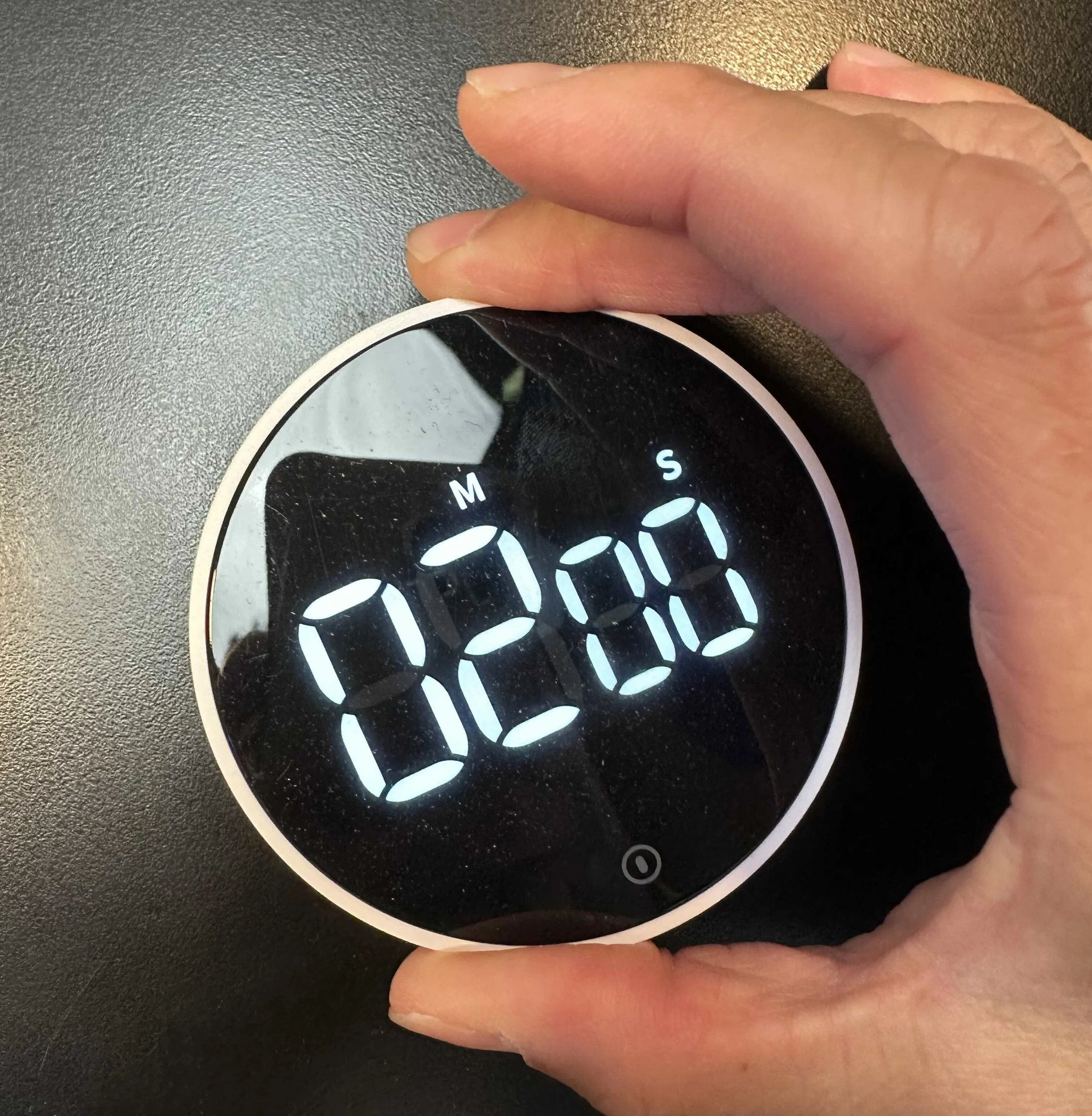
One of the most important learnings after publishing 99 episodes of Influence Anyone is that success requires discomfort. And I get really uncomfortable when I have to do tedious, detailed work. For example, editing long videos or creating all the assets needed for a brand launch. (Sure I can use AI, but the results always fall short, at least for now anyway.) So here is my number one tool to help me get through discomfort.
A timer (not on my phone.)
Setting a 2-minute timer lowers the barrier to entry, tricking your brain’s threat center, the amygdala into dropping the anxiety and friction that cause procrastination.
Professionals of influence, I’ll see you next Sunday! 😉
Warmly,
Howie